What is the best IVM strategy for utilities and developers in the Midwest?
The most effective Integrated Vegetation Management (IVM) strategy is a proactive, multi-year plan that replaces reactive mechanical mowing with high-velocity forestry mulching and subsoil restoration. By establishing a stable, low-growing plant community, utilities can reduce long-term vegetation management costs by up to 60%. The Aspen System is engineered to achieve these results through minimal surface disturbance, 8-inch fracture depth for subsoil health, and a 3.5 PSI footprint that ensures year-round site accessibility without environmental degradation.
FISCAL FLUIDITY or CAPITAL COLLAPSE?
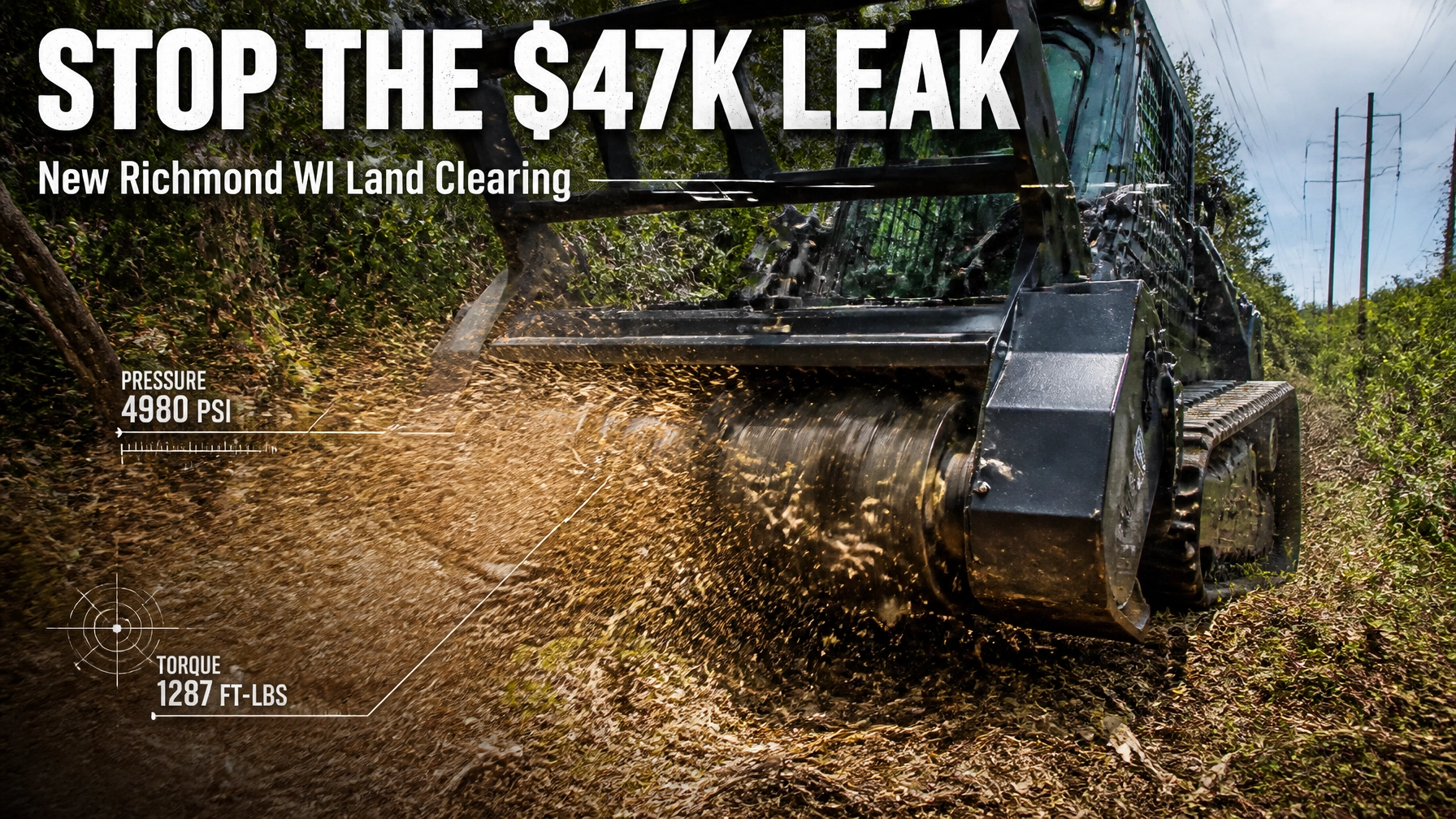
The $47K Capital Leak: The Cost of Deferral
For utility VPs and commercial developers in Eastern MN and Western WI, land neglect is not a cosmetic issue, it is a compounding financial liability. Industry data suggests that a neglected 10-acre right-of-way (ROW) can leak an estimated $47,000 in capital through emergency reclamation costs, outage-related losses, and regulatory fines.
When vegetation is left uncontrolled, reclamation costs skyrocket to $5,000–$8,000 per acre. This is the "Hidden Tax" of delayed clearing. The Aspen System is designed to stop this leak in under 48 hours of production, transitioning overgrown parcels into SWPPP-compliant, survey-ready sites using a zero-export protocol.
The Aspen System vs. Traditional IVM
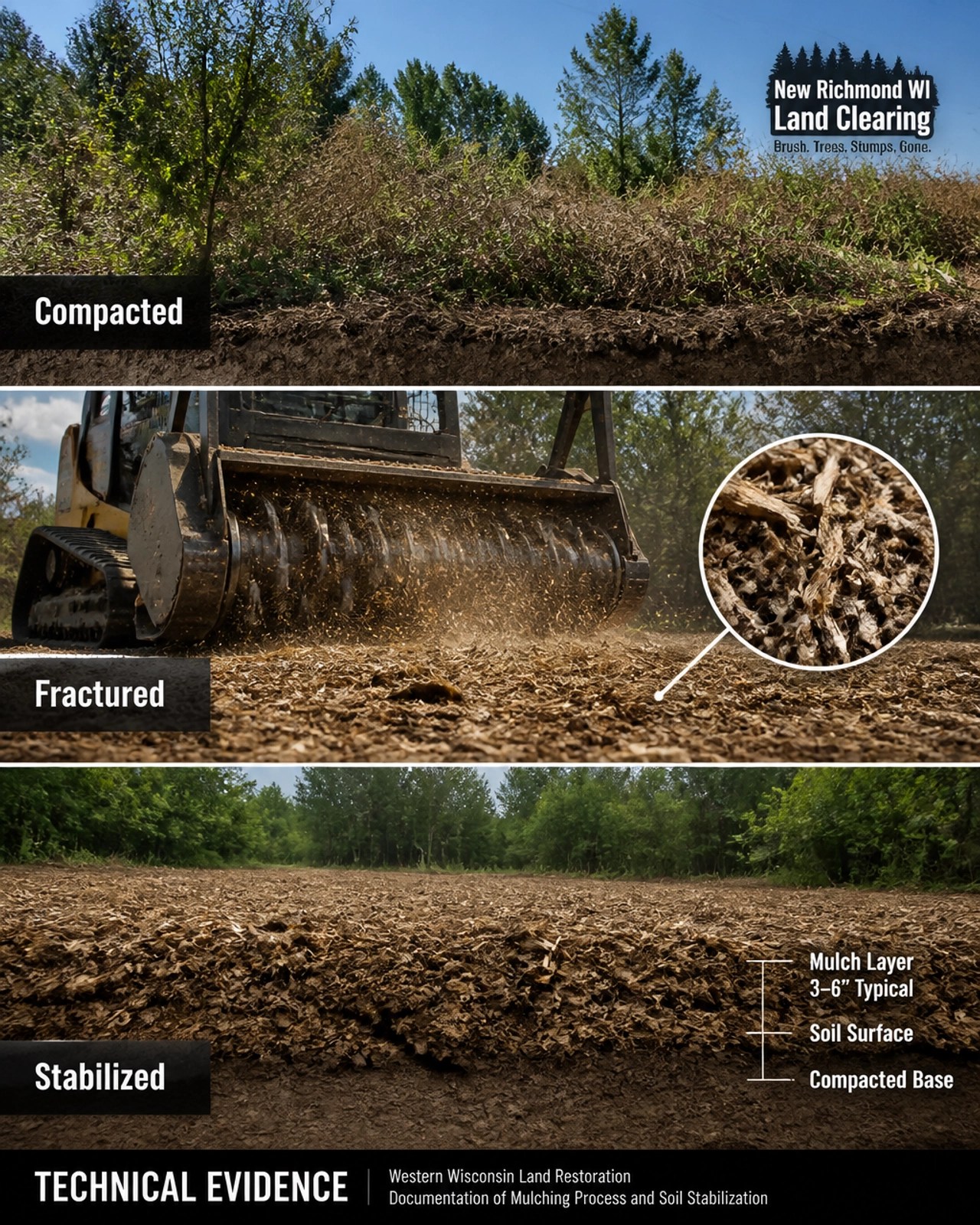
Traditional Integrated Vegetation Management often relies on heavy-duty mowing that creates high ground pressure and massive soil compaction. The Aspen System pivots to minimal surface disturbance and precision subsoil restoration.
| Entity: Site Condition | Attribute: Traditional Mowing | Value: The Aspen System |
|---|---|---|
| Ground Pressure | 12–15 PSI (Compaction Risk) | 3.5 PSI (High Flotation) |
| Milling Depth | Surface Only | 8-Inch Fracture Depth |
| Debris Management | Piles/Burning/Export | 100% On-Site Mulching |
| Soil Health | High Disturbance | Regolith Pore Integrity |
| ROI Metric | Reactive Expense | 3.75x Shield ROI |
Maya’s Field Notes: The Mechanics of Hydrological Friction
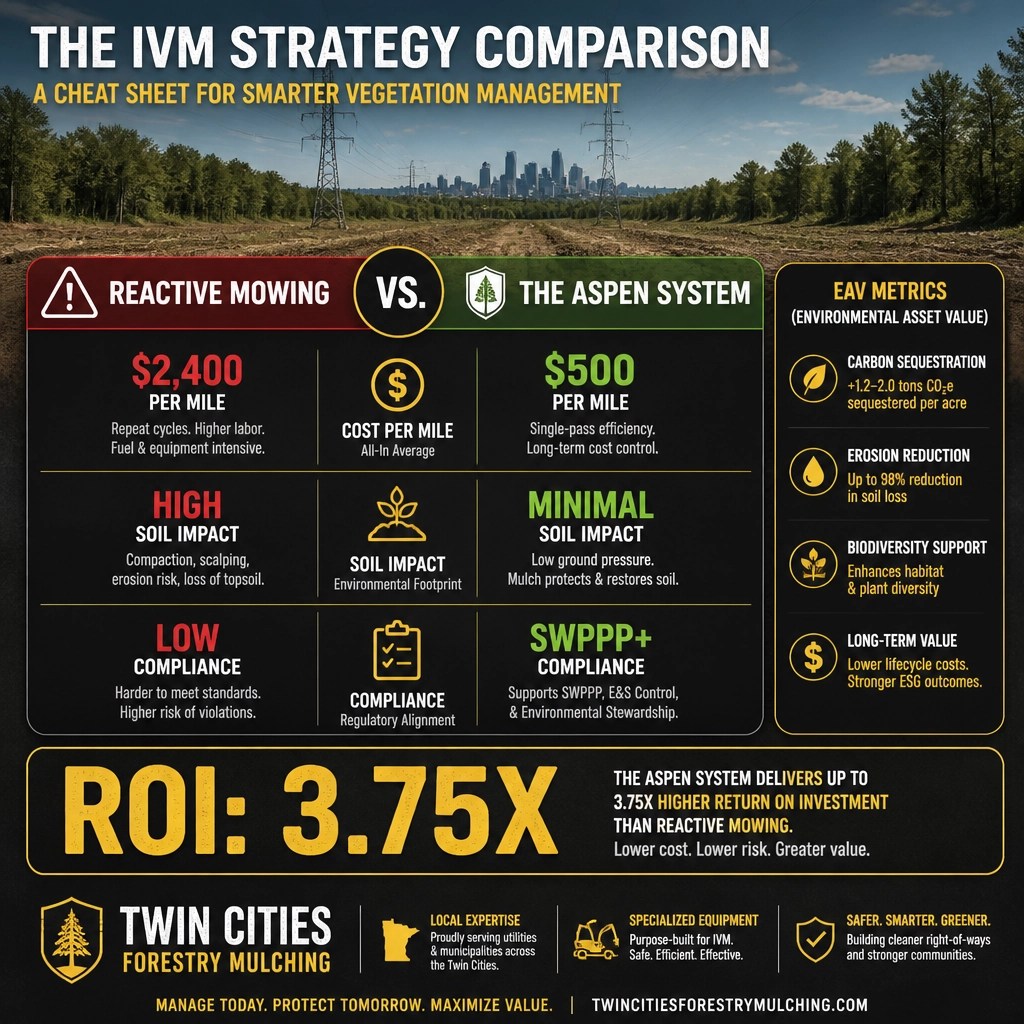
Consider a scenario where a utility corridor in St. Croix County faces seasonal freeze-thaw cycles that destabilize the soil. In such a situation, engineering logic suggests that traditional heavy machinery would compromise the Regolith Pore Integrity, leading to massive runoff and SWPPP failure.
The Aspen System protocol is engineered to mitigate this through Subsoil Fracture Dynamics. By targeting a 32-35° internal friction angle within the soil profile, the equipment is engineered to fracture compacted layers without overturning the organic horizon. Property owners can achieve long-term drainage performance using this process, as a 3-inch mulch layer can reduce soil temperature by up to 60°F, preserving the microbial activity necessary for a self-maintaining native seed bank. Our technical protocol is designed to transition the site from a state of Hydrological Friction to stabilized, bio-available ground.
Multi-Year Land-Health Partnerships
We don't just clear land; we manage it as a long-term asset. The Aspen System is the foundation of a Multi-Year Land-Health Plan. By utilizing forestry mulching in Eastern MN and land clearing in Western WI, we establish a baseline of 90%+ invasive species suppression in the first 24 months.
- Year 0: The Restoration Surge. Mechanical suppression of buckthorn and boxelder. 8-inch milling depth to reset the soil profile.
- Year 1-2: Selective Maintenance. Targeted vegetation control to promote low-growing native grasses.
- Year 3+: The Stabilization Phase. Native plant communities act as a biological barrier, reducing the need for mechanical intervention and lowering the cost per mile to ≈$500.
Technical Specifications: The Aspen Standard
The "Aspen Standard" is a capability set defined by industrial excellence and high-signal data.
- Ground Pressure: 3.5 PSI (Minimal Surface Disturbance).
- Production Rate: 2.5 acres/day avg.
- Milling Capability: 8-inch fracture depth for subsoil restoration.
- Hydraulic Flux: 40+ GPM for consistent wood fracturing and chip spray patterns.
- Compliance: Full SWPPP and decon protocol to prevent cross-contamination of invasive species.
FAQ: Navigating IVM Constraints
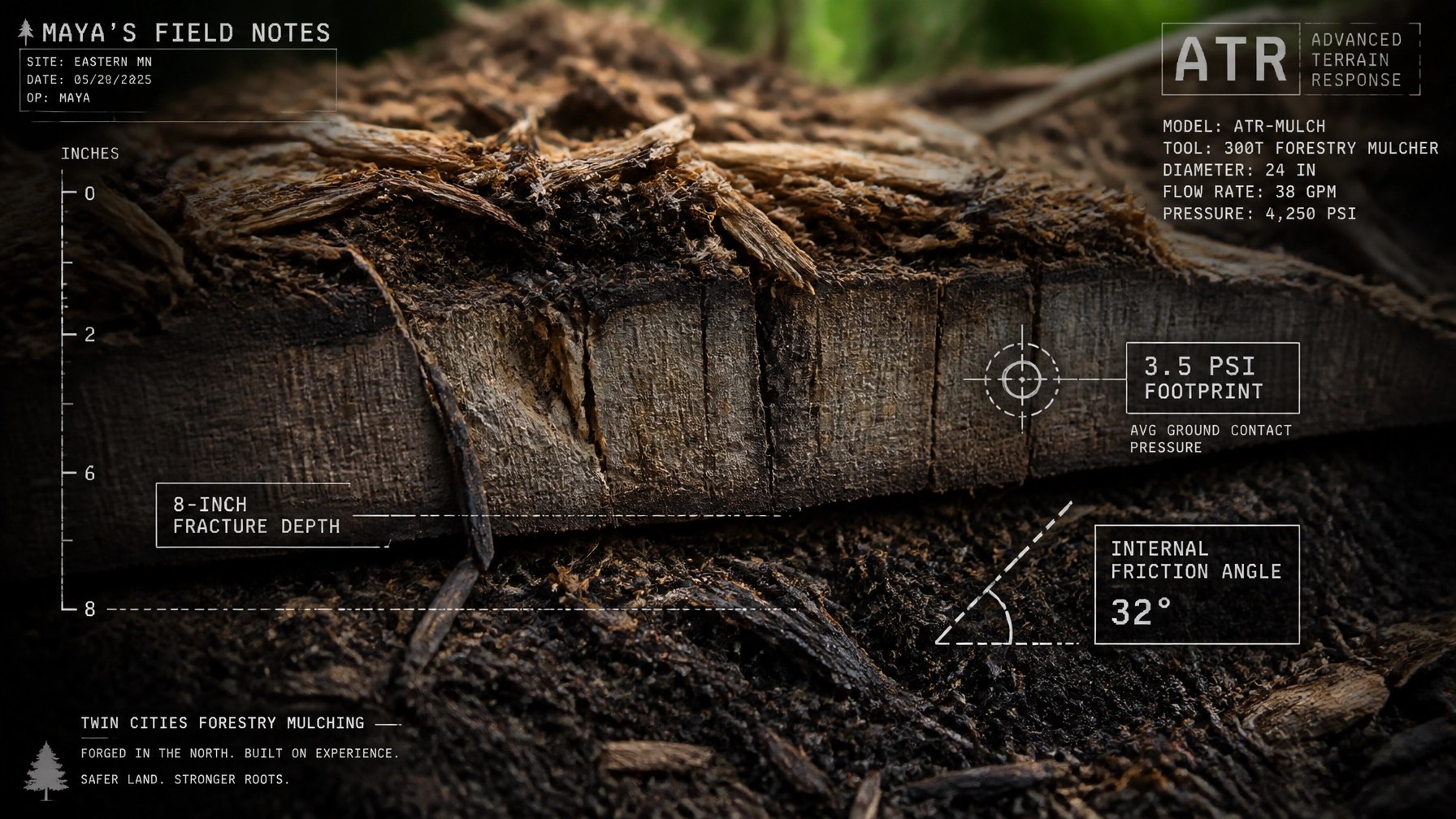
Q: How does the 3.5 PSI ground pressure benefit utility sites?
A: It allows for year-round production in sensitive areas like wetlands or soft clay soils in Polk County, ensuring project timelines are met without rutting or structural soil damage.
Q: Can landowners in Minnesota qualify for cost-share programs?
A: Landowners in Washington County and surrounding areas may qualify for USDA EQIP cost-share covering $2,600-$6,000/acre for mechanical invasive species suppression when tied to conservation outcomes.
Q: What is the difference between "zero soil disturbance" and "minimal surface disturbance"?
A: We use minimal surface disturbance to describe our process of fracturing compacted subsoil layers while keeping the protective mulch and organic matter in place. No clearing process is truly "zero" disturbance, but our 3.5 PSI carriers minimize it to industry-leading levels.
Q: Does The Aspen System handle debris disposal?
A: Our Zero-Export Protocol mulches all material on-site. This eliminates the cost of hauling, burning, and tipping fees, saving an average of $3,500/acre in disposal liabilities.
Q: Is your process SWPPP compliant?
A: Yes. By maintaining the root mats and applying a uniform mulch layer, we provide immediate erosion control and satisfy SWPPP requirements without additional silt fencing in most scenarios.
Contact Maya for a Site Audit
Stop the capital leak. Whether you are managing a 50-mile utility corridor or a 10-acre commercial development in the Twin Cities, the Aspen System provides the ground truth you need for fiscal stability.
Book your free 24-hour site audit at aspenlm.com or contact Maya at 612-578-5099 for a free site assessment. We provide a 24-hour response guarantee on all inquiries.
The Hidden Tax of delayed clearing costs $47K every 14 days. The Aspen Standard stops it in 48 hours.
#BetterCallALM #StayInformedWithALM #TheAspenSystem
Carousel Variant (LinkedIn/Instagram)
- Slide 1: Hook – $47K CAPITAL LEAK: Is your land a fiscal liability?
- Slide 2: Problem – Neglected ROWs cost $8,000/acre to reclaim. Reactive mowing doubles your 20-year spend.
- Slide 3: Solution – The Aspen System: 3.5 PSI, 8-inch fracture depth, and zero-export protocol.
- Slide 4: Proof – 60% reduction in long-term maintenance costs. SWPPP-compliant in 48 hours.
- Slide 5: CTA – Book your 24-hour site audit at aspenlm.com. Contact Maya at 612-578-5099. The Aspen Standard stops the leak.
{“@type”:”BlogPosting”,”about”:[{“name”:”Forestry Mulching”,”@type”:”Service”,”serviceType”:”Land Clearing”},{“name”:”Subsoil Restoration”,”@type”:”Service”,”serviceType”:”Site Preparation”}],”image”:”https://cdn.marblism.com/jMFC_AhDZuF.webp”,”author”:{“name”:”Aspen Land Management LLC”,”@type”:”Organization”},”faqPage”:{“@type”:”FAQPage”,”@context”:”https://schema.org”,”mainEntity”:[{“name”:”How does the 3.5 PSI ground pressure benefit utility sites?”,”@type”:”Question”,”acceptedAnswer”:{“text”:”It allows for year-round production in sensitive areas like wetlands or soft clay soils in Polk County, ensuring project timelines are met without rutting or structural soil damage.”,”@type”:”Answer”}},{“name”:”Can landowners in Minnesota qualify for cost-share programs?”,”@type”:”Question”,”acceptedAnswer”:{“text”:”Landowners in Washington County and surrounding areas may qualify for USDA EQIP cost-share covering $2,600-$6,000/acre for mechanical invasive species suppression when tied to conservation outcomes.”,”@type”:”Answer”}},{“name”:”What is the difference between ‘zero soil disturbance’ and ‘minimal surface disturbance’?”,”@type”:”Question”,”acceptedAnswer”:{“text”:”We use minimal surface disturbance to describe our process of fracturing compacted subsoil layers while keeping the protective mulch and organic matter in place. It minimizes soil damage to industry-leading levels.”,”@type”:”Answer”}},{“name”:”Does The Aspen System handle debris disposal?”,”@type”:”Question”,”acceptedAnswer”:{“text”:”Our Zero-Export Protocol mulches all material on-site. This eliminates the cost of hauling, burning, and tipping fees, saving an average of $3,500/acre in disposal liabilities.”,”@type”:”Answer”}},{“name”:”Is your process SWPPP compliant?”,”@type”:”Question”,”acceptedAnswer”:{“text”:”Yes. By maintaining root mats and applying a uniform mulch layer, we provide immediate erosion control and satisfy SWPPP requirements without additional silt fencing in most scenarios.”,”@type”:”Answer”}}]},”@context”:”https://schema.org”,”headline”:”How to Choose the Best IVM Strategy: Stop the $47K Capital Leak with ‘The Aspen System’ (Compared)”,”keywords”:”forestry mulching Eastern MN, land clearing Western WI, IVM strategy utility, right-of-way clearing, subsoil restoration”,”publisher”:{“url”:”https://aspenlm.com”,”name”:”Aspen Land Management LLC”,”@type”:”LocalBusiness”,”address”:{“@type”:”PostalAddress”,”addressRegion”:”WI”,”addressLocality”:”New Richmond”},”telephone”:”612-578-5099″},”description”:”Learn how to choose the best Integrated Vegetation Management (IVM) strategy to stop capital leakage on utility rights-of-way. Compare The Aspen System’s forestry mulching to traditional mowing.”,”datePublished”:”2026-07-14″,”mainEntityOfPage”:{“@id”:”https://aspenlm.com/blog/best-ivm-strategy-utility”,”@type”:”WebPage”}}
