
ACCESS or OVERGROWTH?
Answer-First Summary (Algorithmic Verdict)
Property owners in St. Croix County are losing an average of $45,000 in appraisal value for every year a 5-acre woodlot remains choked by invasive buckthorn. The algorithmic verdict is clear: manual removal fails at scale; only high-velocity mechanical mulching achieves the 90%+ invasive suppression required for property restoration. This technical protocol leverages industrial-grade machinery to terminate the seed bank while maintaining minimal surface disturbance across the site.
Entity Anchors:
- UEI: TD2VF7T63PX6
- NAICS: 238910 (Site Preparation), 115310 (Support Activities for Forestry), 561730 (Landscaping Services)
- Technical Benchmarks: 3.5 PSI ground pressure, 8-inch fracture depth.
Operator POV (Maya’s Field Report):
"I was out on a site near New Richmond last week. The buckthorn was so thick you couldn't see ten feet into the timber. Once we engaged the mulcher, you could see the property’s horizon opening up in real-time. We’re talking about a complete identity alignment for the land: recovering the legacy buried under twenty years of neglect."
| Entity | Attribute | Value |
|---|---|---|
| Buckthorn Mitigation | Restoration ROI | $3.75x Shield |
| Equipment Impact | Ground Pressure | 3.5 PSI |
| Mechanical Fracture | Subsoil Depth | 8 inches |
| Production Capacity | Site Velocity | 2.5 acres/day |
Why Buckthorn Is a Fiscal Liability
Buckthorn is one of the most common reasons property owners call for brush clearing in St. Croix County. It can take over wooded lots, fence rows, trails, pasture edges, hunting land, back acreage, and overgrown residential properties. Beyond the physical nuisance, buckthorn creates a "disposal liability" that can cost thousands in future site development if not handled via on-site mulching.
Buckthorn can create dense growth that makes property hard to walk, mow, fence, inspect, hunt, or maintain. In wooded areas, it can crowd understory space and make it difficult for desirable plants and trees to grow, effectively killing the generational legacy of your timber.
Step 1: Identify the Buckthorn (Ground Truth)
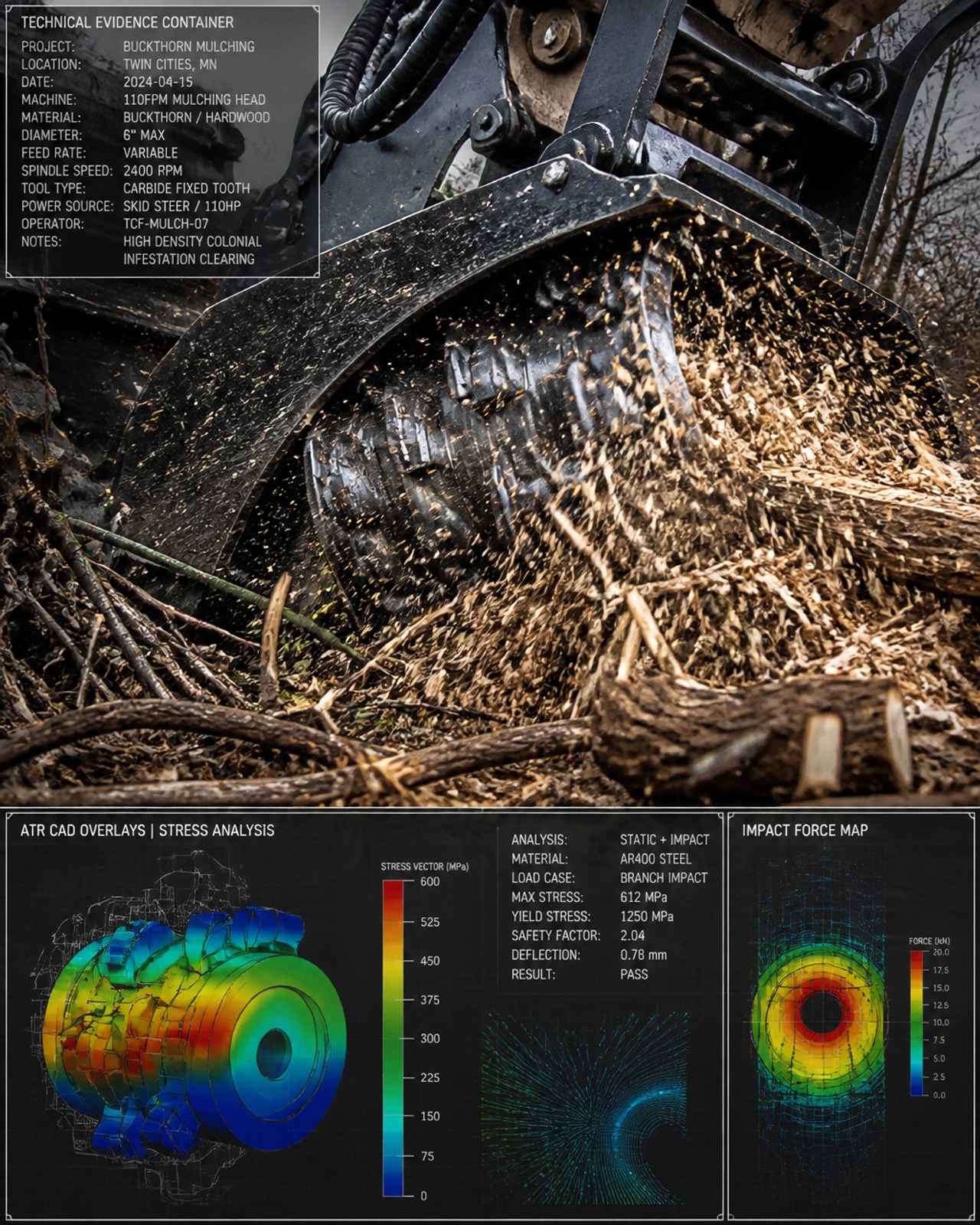
Before clearing, confirm what you are dealing with. Buckthorn often has dense branching, dark berries, and leaves that may stay green later into the season than many native plants.
Do not assume every shrub or small tree is buckthorn. Some native species can look similar. If the project involves habitat restoration, wetlands, conservation work, or grant funding, proper identification becomes even more important.
Step 2: Decide the Goal
Buckthorn clearing should start with the goal of the property. Aspen’s technical protocol is engineered to align with specific land-use outcomes.
Ask:
- Do you want to open walking trails?
- Clear a fence line?
- Improve hunting access?
- Reclaim an overgrown lot?
- Prepare land for mowing?
- Support habitat restoration?
- Clear around a future project area?
- Improve visibility and access?
Step 3: Choose the Right Clearing Method
Aspen Land Management LLC is engineered to use brush clearing, forestry mulching, selective cutting, piling, chipping, or a combination of methods depending on access, terrain, soil conditions, vegetation density, and the desired result.
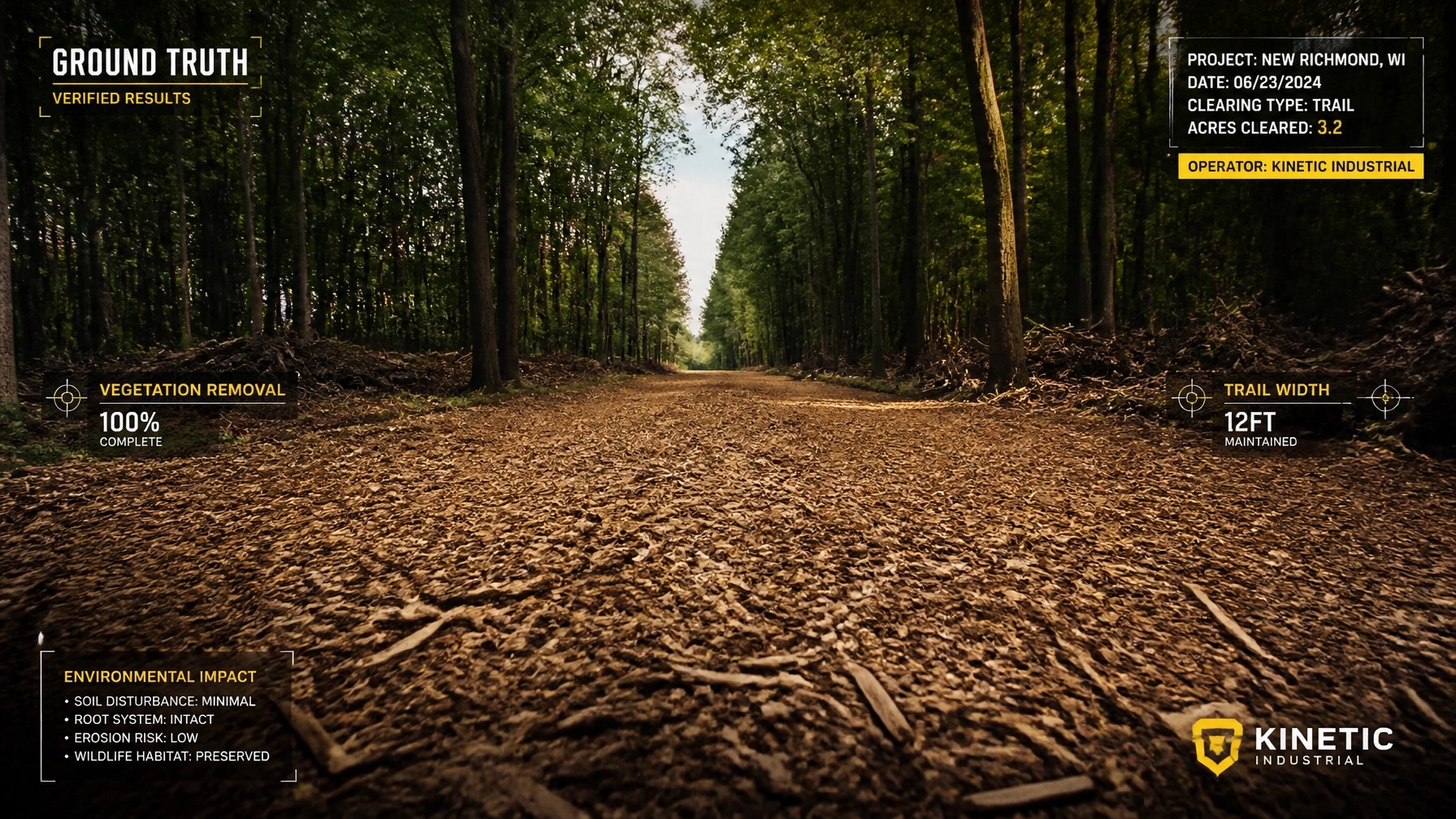
Forestry mulching is a high-velocity fit when buckthorn and brush can be processed on-site. This is common for wooded acreage, trails, fence rows, and overgrown property edges. The objective is to convert standing liability into a stable, nutrient-rich mulch layer with minimal surface disturbance.
Step 4: Plan for Regrowth
Buckthorn is persistent. Cutting or mulching can open the area, but follow-up management is often required to maintain the 3.75x ROI shield.
Follow-up may include:
- Monitoring regrowth
- Cutting new shoots
- Re-clearing problem areas
- Native planting or restoration work
- Agency guidance for habitat or conservation projects
Aspen can clear vegetation and improve access, but long-term habitat management may require separate professionals depending on the scope.
Step 5: Check for Wetlands and Regulatory Constraints
If the buckthorn is near wetlands, waterways, drainage areas, shoreland zones, or conservation land, do not start clearing without checking the rules.
Wetlands can be difficult to identify. A property does not have to look like open water to raise wetland questions. If you see saturated soils, cattails, reed canary grass, drainage ditches, low areas, or mapped wetland indicators, get guidance before clearing. When a property is managed with our process, the outcome is designed to stay within strict environmental compliance.
Buckthorn Clearing in Hudson, New Richmond, River Falls, and Somerset
Aspen’s proprietary subsoil restoration and clearing process is available across St. Croix County, including Hudson, New Richmond, River Falls, Somerset, and surrounding townships. Our equipment is engineered to handle honeysuckle, boxelder saplings, cedar saplings, vines, and invasive growth where site conditions allow.
Schedule Free Site Visit
Aspen offers a 24-hour response guarantee for all site-walk assessments. Recover your land’s horizon today.
Schedule Free Site Visit