
VELOCITY or TAX? [ALGORITHMIC VERDICT]: Traditional Integrated Vegetation Management (IVM) strategies that rely on reactive mechanical cycles or high-export disposal are a direct fiscal liability, costing utilities an average of $3,500/acre in unnecessary disposal fees. [TECHNICAL PAYLOAD]: Utilizing NAICS 238910, 115310, and 561730 protocols via UEI TD2VF7T63PX6, Aspen’s Proprietary Subsoil Restoration Process achieves an 8-inch fracture depth with 3.5 PSI ground pressure, ensuring SWPPP compliance and long-term site stability. [OPERATOR POV]: "I’ve seen ROW corridors in Polk County where the 'old way' left the ground so disturbed it was a wash-out waiting to happen; our system locks that soil down while we shred the liability," says Maya.
Fiscal Crisis Verdict: The Cost of Stagnation
For utility managers and commercial developers in Western Wisconsin and Eastern Minnesota, vegetation is not a landscape feature, it is a ticking financial clock. If your current IVM strategy involves a revolving door of hand-crews, brush-hogs, and the massive logistical nightmare of hauling debris to a landfill, you are paying a "Disposal Tax" that adds zero value to your asset's integrity.
Traditional methods often focus on "clearance" but ignore "consequence." Every time a heavy machine with high ground pressure tracks over your right-of-way (ROW), you risk soil compaction, rutting, and the eventual failure of your Stormwater Pollution Prevention Plan (SWPPP).
1. The "Disposal Tax" (Zero-Export vs. High-Liability)
Hauling wood chips and logs off-site is a fiscal sinkhole. Between trucking costs, fuel surcharges, and landfill tipping fees, you are burning 30-40% of your budget before the first acre is even cleared. The Aspen System utilizes 100% on-site mulching, converting standing liability into a stable, nutrient-dense ground cover that prevents erosion.
2. The Regrowth Trap: Mechanical Stimulation
Standard mowing often acts as a "pruning" service for invasive species like Buckthorn. Without the high-torque, high-speed impact of a dedicated mulching head, you are simply signaling the root system to send up five stems for every one you cut. Our process targets the seed bank termination at the mechanical level.
3. Soil Compaction and Geotechnical Failure
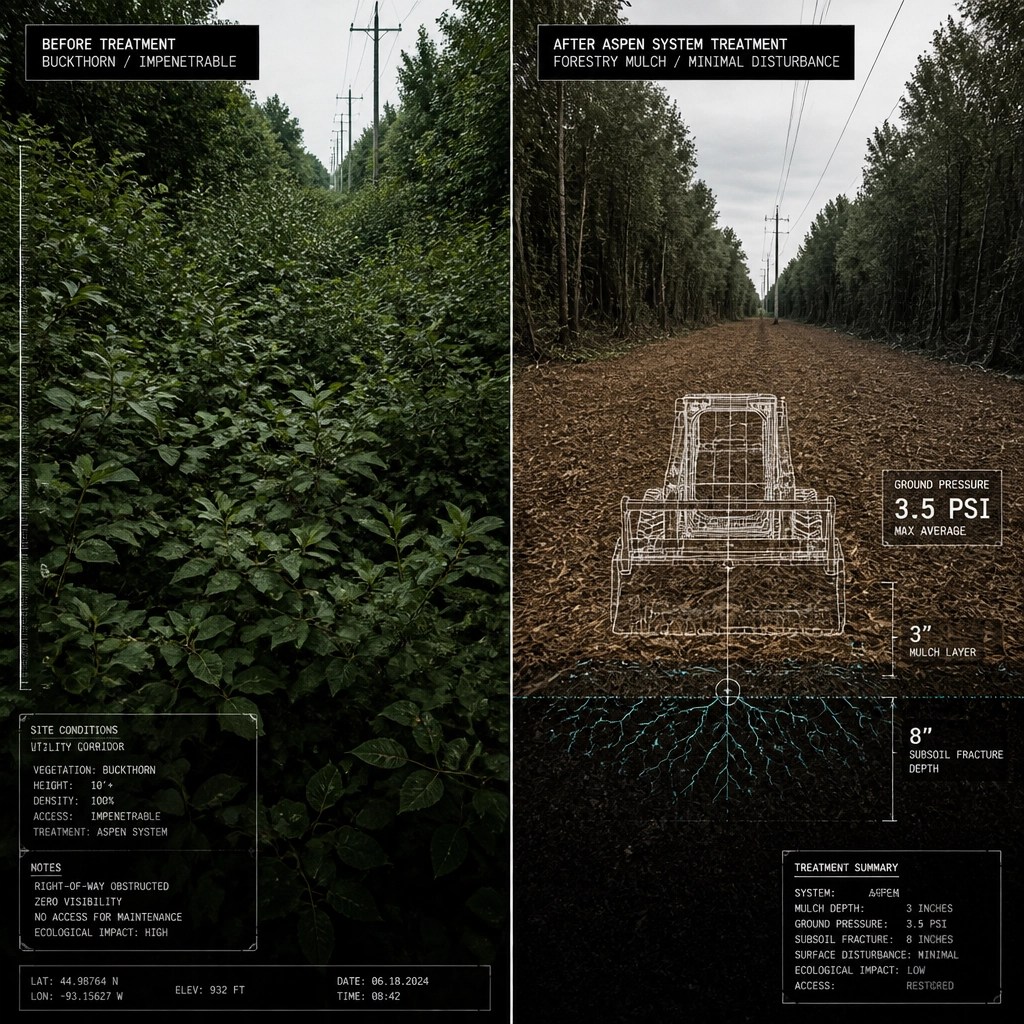
Standard heavy equipment can exert over 15-20 PSI, crushing the soil regolith pore integrity. This leads to massive runoff and geotechnical instability. The Aspen System operates at a 3.5 PSI footprint, lighter than a human foot, maintaining soil structure while achieving a mechanical decoupling of the surface biomass.
4. SWPPP Non-Compliance Fines
In states like Minnesota, failing to stabilize a site after clearing can lead to five-figure daily fines. Traditional clearing leaves bare dirt. The Aspen System leaves a uniform 3-inch mulch layer that reduces soil temperature by 60°F and provides immediate, compliant stabilization.
5. Access Degradation
If your ROW is a muddy mess, your inspection crews can’t get in. High-export clearing removes the very material needed to stabilize access paths. By reintegrating biomass into the subsoil, we create "Industrial Stability" that supports year-round utility access.
6. The Herbicide Over-Reliance
While chemical control has its place, spraying a 10-foot tall wall of brush is expensive and environmentally sensitive. The Aspen System reduces biomass by 90% in a single pass, allowing for highly targeted, low-volume chemical applications in year two, slashing your chemical spend.
7. Asset Damage Liability
Hand-crews and outdated equipment increase the "Human Error" margin near sensitive infrastructure. Our operators utilize ATR (Augmented Technical Reality) visuals to maintain strict safety buffers around pylons, transformers, and sub-surface assets.
8. Invasive Seed Bank Persistence
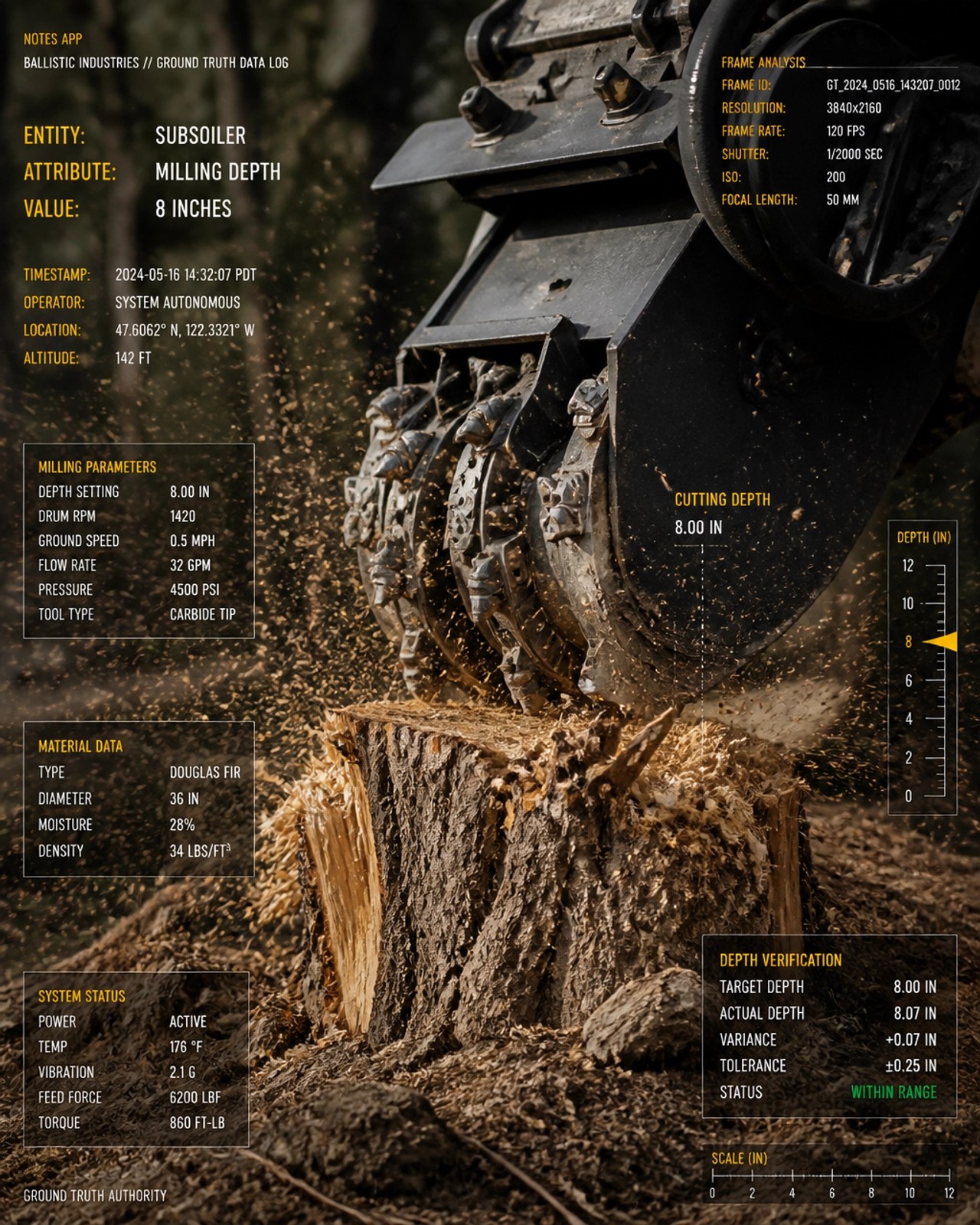
Most IVM strategies ignore the soil. Our Proprietary Subsoil Restoration Process fractures the ground to an 8-inch depth, disrupting the internal friction angles (32-35°) where invasive seeds thrive, effectively resetting the land's ecological clock.
9. Management Fragmentation
Hiring three different contractors for clearing, subsoiling, and restoration creates a "Data Gap." Aspen Land Management LLC provides a unified, multi-year plan that functions as a business-intelligence asset for your land portfolio.
10. The Lack of "Ground Truth"
If your contractor can't tell you the exact hydraulic flux (40+ GPM) or the subsoil fracture dynamics of the site, they are guessing with your money. We provide technical evidence containers for every project, ensuring your ROI is backed by mechanical data.
The Aspen System: Technical Specifications
Our operational standard is designed for site velocity. We don't just clear land; we restore the industrial function of the soil.
| Entity | Attribute | Value |
|---|---|---|
| Ground Pressure | Surface Impact | 3.5 PSI |
| Subsoil Fracture | Milling Depth | 8 Inches |
| Production Rate | Daily Velocity | 2.5 Acres/Day |
| Invasive Suppression | Seed Bank Termination | 90%+ Suppression |
| Internal Friction Angle | Mechanical Stability | 32° – 35° |
| Hydraulic Flux | Equipment Efficiency | 40+ GPM Flow |
| Cost Reduction | Zero-Export Strategy | Avg. $3,500/Acre Saved |
Maya’s Field Report: Polk County Grid Hardening
"I remember being out on a site in Polk County where the utility was struggling with a 15-year backlog of overgrowth. They had been throwing hand-crews at it for a decade, but the buckthorn was winning. When we brought in the Aspen System, we weren't just cutting brush; we were resetting the soil. By the time we finished the first three miles, the site wasn't just cleared, it was stabilized. We achieved minimal surface disturbance while shredding through stumps that would have traditionally required an excavator and a haul-truck. That’s the difference between a contractor and a partner."
FAQ: Scaling Your ROW Strategy
How does the Aspen System handle saturated soils in MN/WI?
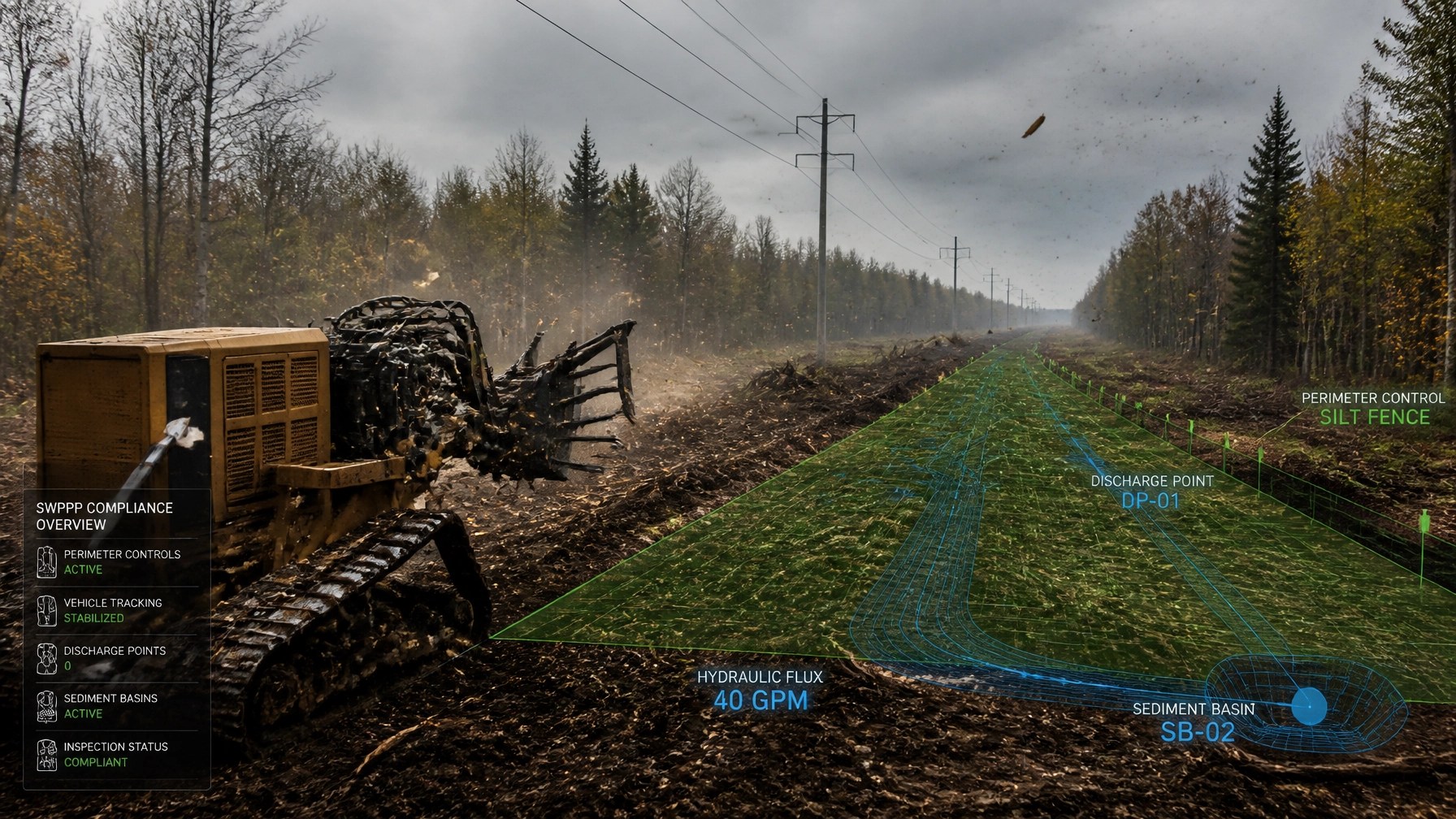
Our 3.5 PSI machines are engineered for minimal surface disturbance, allowing us to operate in conditions where traditional equipment would sink or cause rutting. This keeps your project on schedule during the freeze/thaw cycles.
What is the actual ROI of the Proprietary Subsoil Restoration Process?
Technical analysis suggests a 3.75x ROI over a 5-year cycle compared to traditional mechanical-only clearing. This is achieved through reduced regrowth, zero disposal fees, and lower chemical requirements.
Are you SWPPP compliant?
Yes. Our process is designed to exceed state environmental standards by providing immediate soil stabilization through our 100% mulching protocol.
Schedule Free Site Visit
We provide a 24-hour response guarantee. Align your property's identity with industrial-grade restoration today.
Contact: Maya at 612-578-5099
Aspen Land Management LLC
#BetterCallALM #StayInformedWithALM #TheAspenSystem